
Henry County VINE Release Coverage
Ohio VINE means Victim Information and Notification Everyday. The Ohio Attorney General describes it as a round-the-clock custody, case-information, and notification service. Henry County's main local jail path runs through the Corrections Center of Northwest Ohio, or CCNO. CCNO participates in Ohio VINE. ODRC also supplies state-prison events.
For a CCNO record, county-jail coverage can include general release, transfer, escape, and death. ODRC coverage can include general release, death, a prison transfer, specified parole-hearing notices, parole revocation and return, release from parole, and other reviews. Those event names are not interchangeable. A transfer means the person moved within custody. Release from parole ends supervision, not prison custody on that day.
VINE may also carry youth-system events, but protected juvenile identity does not belong in an adult released-inmate check. A Henry County juvenile inquiry must go through the authorized court process. VINE does not cover a federal USMS or BOP custody path merely because a federal detainee once occupied a CCNO bed.
| Custody path | VINE role | Confirming source |
|---|---|---|
| CCNO county-jail case | Custody status and covered change notices | CCNO release entry and committing court |
| ODRC state-prison case | Prison and selected parole-related events | ODRC offender detail and Central Records |
| Federal or USMS case | Not the controlling locator | Federal court, USMS, or BOP as appropriate |
CCNO's Henry County VINE Gateway
The local layer is more than a general state link. The CCNO Victim Services gateway names Ohio VINE, supplies the state telephone line, and directs users to Ohio's VINELink selection. This makes it an official notification route when a Henry County name drops off CCNO's active population PDF.
An absent active row still does not prove release. The person may have entered the community, transferred to ODRC, moved under another county or federal authority, or been affected by a data delay. The VINE event label helps sort those possibilities, while the CCNO release record and court entry establish the legal and physical exit.
The successful VINELink capture below shows the official search and notification environment used for an Ohio check.
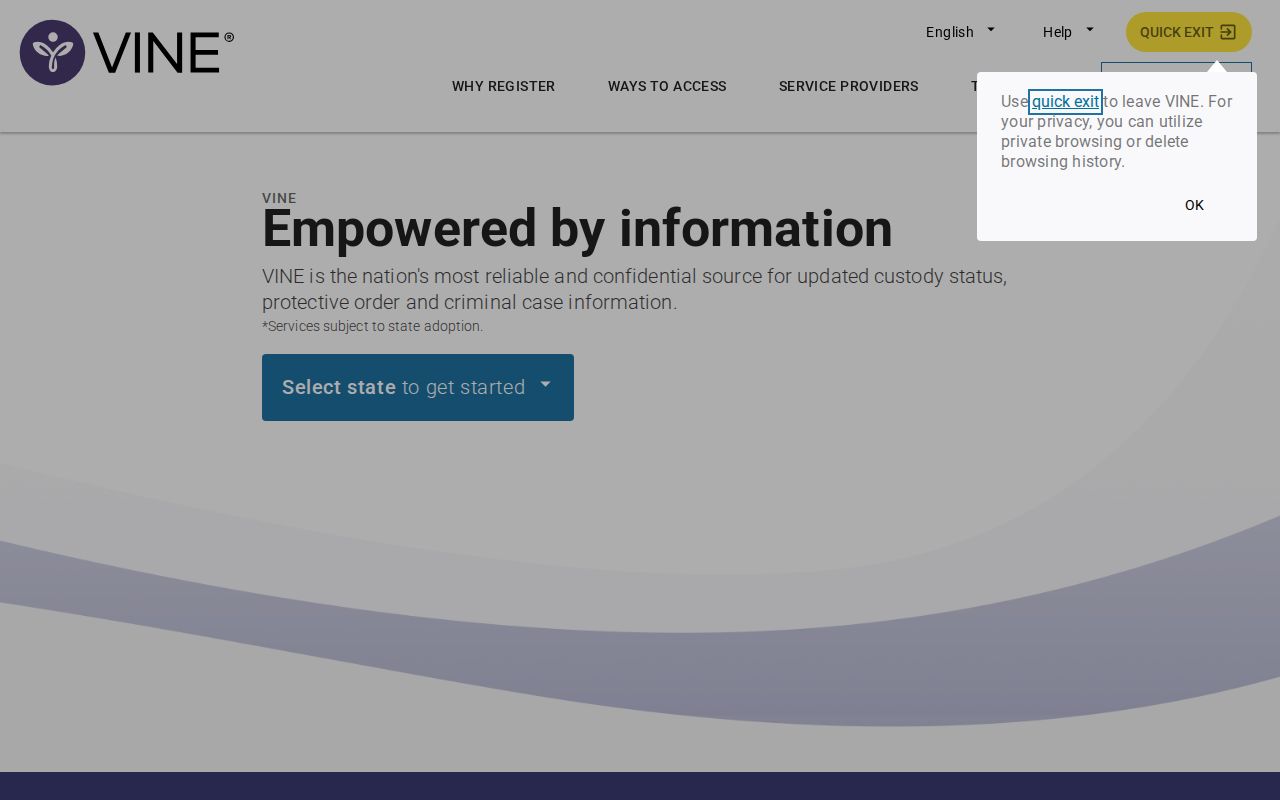
Use the live interface for the latest status because a saved screen cannot reflect a later custody event or registration change.
Note: Ohio VINE can also be reached by telephone at 1-800-770-0192 when the web search does not resolve a record.
Search One Henry County Inmate
A focused VINELink check begins with one known person and one likely custody source. Use only enough personal detail to separate candidates. CCNO is the expected source for a Henry County jail case, while ODRC is the expected source after admission to an Ohio prison. A person transferred out of CCNO should not be treated as free just because the local source no longer lists current custody.
- Open VINELink and select Ohio.
- Choose the offender or custody search. Enter the person's name or a known identification number.
- Review possible matches. Select the CCNO-sourced record for the regional-jail case or the ODRC-sourced record for a state-prison case.
- Match an identifier, facility, and case context. A common name alone is not enough.
- Read the exact custody status, event, source, and last update. Preserve the event date if a general release is shown.
- Confirm the event with CCNO, ODRC, or the committing court. VINE is not a certified release document.
If no result appears, try a careful spelling variation and the known ID. Then call Ohio VINE and the likely custodial agency. A coverage issue, update lag, transfer, or inability to locate a record after release may explain the blank result. The broader Henry County released-inmate search provides the court, archival CCNO, ODRC, and federal fallback paths.
The CCNO active inmate search can help confirm that the person is still in the regional jail, but it is a current-custody source. After a row disappears, use the CCNO archival search to recover a booking number and booking-date range. An archived booking proves that intake occurred. It does not establish community release, so carry the identifier into VINE, the court docket, and a release-record request.
Henry County VINELink Release Fields
The live result should be read field by field. A released result must use the interface's actual wording. Do not turn a scheduled or estimated date into a completed event, and do not shorten a transfer label to release.
| Field or event | What it establishes |
|---|---|
| Name or record identifier | Helps distinguish the intended person from similar names |
| Custody source | Shows whether CCNO, ODRC, or another participating authority supplied the record |
| Custody status or event | States the reported condition, such as in custody, general release, or transfer |
| Facility or location | Identifies the reporting custody setting, not necessarily a permanent location |
| Event date or last update | Shows when the source reported the event or refreshed the status |
| Notification options | Shows which phone, email, text, or other registration choices are currently offered |
A state-prison date requires special care. ODRC uses “Expected Release Date/Parole Eligibility Date” on applicable details. That combined field can represent a projection or the month when an eligible person may be considered by the Parole Board. VINE does not transform it into a guaranteed exit date. A later ODRC Released or APA Supervision status is stronger proof that prison confinement ended.
Register Henry County Release Notifications
Registration is tied to the correct in-custody record. Find and verify that record before entering contact information. Available channels can include telephone, email, text or SMS, and TTY. The Ohio Attorney General also identifies VINEMobile as a way to access the service.
- Open the matched person record and choose the registration or notification option.
- Select an available delivery channel. Enter the phone number, email address, text destination, or TTY information requested.
- For telephone notice, create a memorable four-digit PIN. Keep it private but accessible.
- Complete any on-screen confirmation for email or text. Save the registration confirmation.
- When an automated phone call arrives, listen to the message. Enter the PIN followed by the pound sign to acknowledge it and stop repeat calls.
- Keep the direct contact details for CCNO or ODRC. A notification should be checked against the official custody source.
The official Ohio VINE brochure says email registration does not use the telephone PIN and sends an email when custody changes. The current interface may require a separate email or text confirmation, so follow the live prompts. Registration generally must be completed while the person is still in custody. Waiting until after release may leave no record available for enrollment.
A notice is only as current as the source feed and contact method. Update registration if a phone number or email changes. Keep a separate plan for direct contact with the responsible agency, especially when timely notice affects personal safety.
Note: VINE registration supports notification, but it does not grant access to confidential records or alter a court's release order.
Read Henry County Custody Events
The most important step comes after the alert. Read the event verbatim. General release from CCNO can indicate an exit from jail custody, but the committing court still explains bond, dismissal, sentence completion, or another legal basis. Transfer from CCNO to the Correctional Reception Center or Ohio Reformatory for Women means state custody continues. An ODRC prison transfer likewise is not release to the community.
Parole revocation and return identify a supervision event. Release from parole marks the end of parole supervision. Neither phrase should be used as a substitute for the original prison-release date. Escape and death are distinct custody events that must never be described as ordinary release.
When a Henry County record has several charges or courts, match the case and committing-court information. CCNO serves five counties and also holds federal detainees, so the facility name alone does not prove Henry County authority. A court journal entry can explain why a release occurred and can remain available after a live custody row disappears.
Henry County VINELink Release Limits
VINE is a checking and notification layer. It is not the agency that calculates a sentence, issues a court order, or certifies a discharge. Data can lag, spelling can block a match, and source coverage can differ. A result should be paired with CCNO records for a regional-jail release, ODRC records for a state-prison release, and the committing court for the legal disposition.
CCNO accepts public-record requests by email, mail, phone, and in person. A precise request should identify the booking number and seek the existing admission and exit entry, release or transfer code, event date and time, and destination or receiving agency if maintained. The CCNO public-record policy is the local source for channels, hours, copying terms, and lawful exemptions. This record is stronger than a screen capture when the nature of an exit must be distinguished.
Federal detainees at CCNO need a different route. Leaving CCNO may mean movement under the U.S. Marshals Service rather than freedom. Use the federal court docket or USMS during pretrial custody. For a person designated to or released from federal prison, use the BOP inmate locator. “Not in BOP custody” still may not establish community release if another authority holds the person.
Ohio's sex-offender registry is separate too. It covers only people with a statutory registration duty, not every person released from CCNO or ODRC. The adult VINE workflow should never expose protected juvenile data or infer a youth's release from absence.
Keep a short verification trail: the VINE event wording and time, the source agency, the matching identifier, and the confirming document. That sequence helps separate a delayed notification from the event itself. It also preserves which office supplied each fact when several systems display different update times.